Building machines that sense, decide and act, where mechanical, electrical and software engineering meet as one.
Last updated: October 3, 2026
What Is Robotics Engineering?
Robotics engineering means building a machine that can sense its setting, decide what to do, and act. It pulls together three engineering fields into one. Mechanical builds the body. Electrical gives it power and senses. Software decides what it does. A robot layers all three problems together. An engineer has to solve them together.
Every robot runs the same three-step loop, from a warehouse arm to a Mars rover. It senses the world through cameras, sensors, or manual input. It decides what to do with that information. Then it acts: moving a motor, gripping an object, or adjusting its course. Sense, decide, act. Get any one stage wrong, and the whole robot fails, no matter how well the other two worked.
That loop is also why the three fields cannot be solved apart from each other. Mechanical design, electrical systems and software all have to agree, on the same machine, at the same time. A robot that is mechanically sound but electrically faulty does not work. Neither does one that is electrically sound but poorly controlled. A problem in one layer is often caused by a decision in another. A robotics engineer has to hold weight, power and control in view at once.
How Students Learn Robotics Engineering
Students learn the basics of robotics engineering in the classroom, then put that knowledge into practice by building robots for research and competition. The classroom holds a problem still: the constraints are known, and the goal is set in advance. A research project is where that classroom knowledge meets the real world, which is messy and keeps changing. That forces a student to weigh what they've learned against the problem they're solving, the resources, and what their team can do. Competition puts that same judgment under a countdown clock instead of an open-ended problem. Both are harder and more open-ended than solving a problem set. Both are where the student first gets tested against conditions nobody designed for a classroom.
What Do Robotics Engineers Work On
Robotics engineering breaks into several specialties. Each one covers a different part of building a robot.
Hardware and embedded systems work covers the electronics inside the machine. It means learning how a small computer talks to motors, sensors and circuits. It also means making those parts work together without failing. That is the path to a career in embedded systems or hardware engineering.
Software and AI work gives the robot its ability to read its surroundings and decide what to do. It means working with sensor data, computer vision and planning. It also means using machine learning to turn raw input into action. That skill set leads to a career in software, autonomy or AI engineering.
Control systems govern how a robot moves. It means using math and feedback to make a robot arm reach the right spot, or keep a drone steady. The same skill helps a mobile robot follow a path without swinging past the target. Controls engineers turn a planned move into a steady, exact motion.
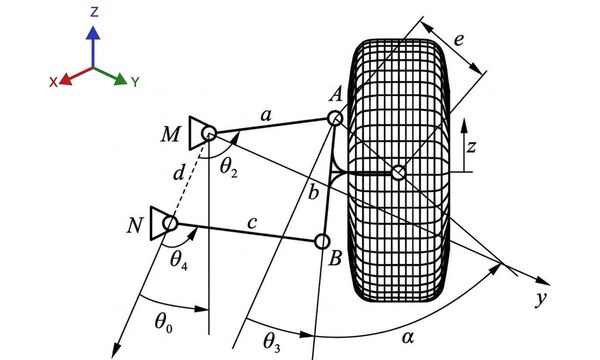
Mechanical design shapes the robot's body. It means using tools like SolidWorks to design parts, joints and frames before they get built. Mechanical design engineers solve problems of strength, weight, movement, and how the parts fit together.
Mechatronics sits where mechanical, electrical and software engineering meet. Instead of focusing on one layer, a mechatronics engineer works across all three, joining sensors, motors and software into one working system. That big-picture view matters in robotics, automation and factory work.
These fields have always had to work together to make a robot run. What is changing is the intelligence placed inside the machine. AI is moving from giving answers on a screen to making choices in the real world. That shift hands robotics engineers a new kind of problem.
Robotics Engineering and Physical AI
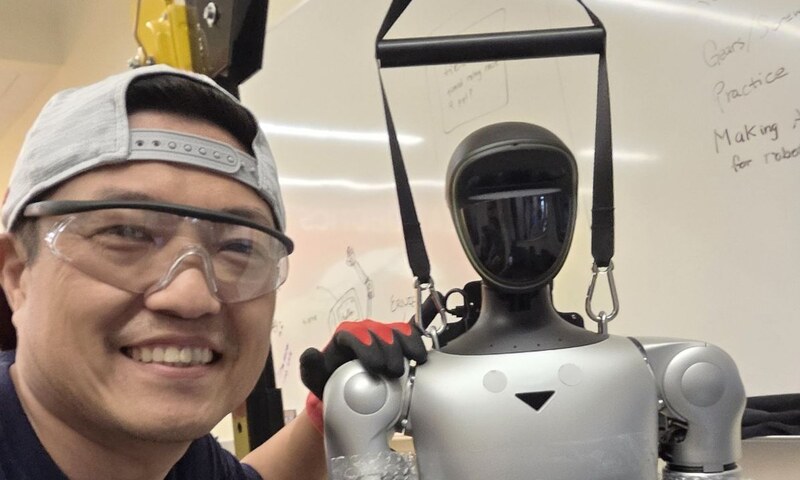
Physical AI is the next frontier in robotics engineering. Most of the AI a student meets today is software. It processes data and returns an answer. Physical AI puts that same decision-making into a robot's physical body. That lets it sense, decide and act in the real world instead of on a screen. A flaw in the software is no longer just a wrong line of text. It can become a knocked-over object, a dropped payload, or a failed test. That shift changes every part of robotics engineering. A smarter model still needs hardware that can run it and sensors that can read the world correctly. It also needs controls that can turn a decision into steady movement, and a body that can carry the movement out. Someone has to connect all of those parts and fix the system when they fail together. That connecting work is now a core part of the job.
Physical AI is also opening new specialties inside the field. A perception engineer builds the cameras, lidar and touch sensors that let a robot read a messy room, not a clean dataset. A simulation engineer trains a robot's model in a virtual world first. That model still has to work once it meets real friction, weight and wear. A safety engineer builds in the fail-safes that catch a bad decision early. A smarter robot still has to move through the same physical world. The smarter it gets at deciding what to do, the more it matters. Engineers still have to get the hardware, sensors and body underneath those decisions right.
Where Can I Study Robotics Engineering?
A standalone robotics engineering degree is still rare. At many top engineering schools, robotics stays inside another discipline instead of becoming one of its own. MIT teaches it inside mechanical engineering, Stanford inside computer science, and Georgia Tech offers it as a minor. A handful of schools, Biola among them, make a different bet. Building intelligent machines has become its own engineering problem.
Biola is one of only three universities on the West Coast with a standalone B.S. in Robotics Engineering, alongside UC Riverside and UC Santa Cruz. UC Riverside and UC Santa Cruz offer that degree at the scale of major public research schools, with UC Riverside alone drawing on more than 60 courses across three engineering departments. Biola is the only private university of the three, built around direct faculty contact and an AI approach to robotics.
Among Christian universities, the field narrows to three: Biola, Messiah University and John Brown University, each with a standalone Robotics Engineering B.S., and Biola is the only one of the three on the West Coast. That rarity matters more as physical AI raises the stakes of what these machines are trusted to do. A software mistake stays on a screen. A physical AI mistake reaches the person standing next to the robot. As robots gain more freedom to sense, decide and act on their own, robotics engineering starts raising a harder question: who these machines are actually built to help. A Christian university brings a clear, settled view of human worth to that question. The opportunity for Biola is to show that a more capable machine can leave the people around it better off.
Study Robotics Engineering and Physical AI at Biola University
Robotics engineering raises two kinds of questions. One is technical: what can a robot do? The other is harder: what should it do, and who decides? Physical AI is making that second question more urgent every year, as robots gain a growing ability to sense, decide and act without a person directing every move. Biola answers from a Christian view of the human person: judgment and conscience belong to the people who build and use a machine, not to the machine itself. Students at Biola meet both questions together, while they're still learning to build the machine.
The physical home for that work is now under construction. Biola broke ground on the Engineering Garage and Robotics Hangar on September 18, 2026, a new home for robotics, drones and autonomous systems. President Barry Corey described the larger purpose at the groundbreaking: "Biola's goal is not ultimately about building better hardware or faster code. It's about building better people."
That line captures what Biola's robotics program is after. Students still have to build the machine: make the arm move, get the drone into the air. They still have to wire the sensors, write the software, and find out why the system failed. Technical skill is the floor, not the ceiling. The program's real aim is judgment: engineers who know what a more capable machine should do in the world. That is engineering for human flourishing in the age of physical AI.
The program is young, so its story is still being written. It already has a competitive robotics team, two engineered robotic arms, a flown drone, active physical AI research and new facilities rising around it. For prospective students, that is a rare chance: not just to enter an established program, but to help build one. The same is true for industry partners. Biola is early enough to partner with and far enough along to be worth watching.
Explore Robotics Engineering at Biola University
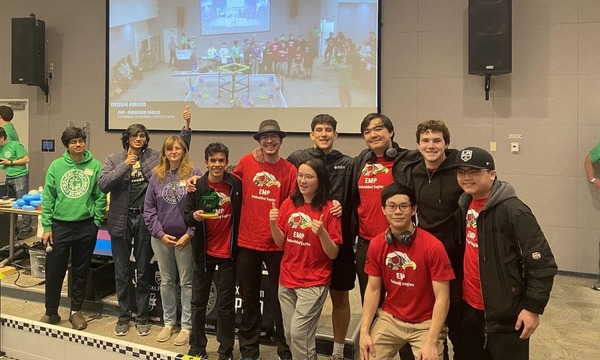
- How Biola's Robotics Team Qualified for VEX Worlds: the Design Award and World Championship invite, earned by debugging sensors and control code as much as building the chassis. The closest thing college robotics offers to shipping a product on a deadline.
- Inside Biola's Senior Capstone Drone Project: four engineering students built the O-Drone for Biola's Campus Safety department. The same skill set behind survey, inspection and delivery drones.
- Two Arms, Two Control Schemes, One Flaw: a joystick-controlled UR5 replica called GELLO and a voice-commanded arm nicknamed Jarvis, built through the Student Engineering Innovation program. The same skills used in industrial automation and assistive robotics.
- B.S. in Robotics Engineering on biola.edu: degree requirements, admissions and the official program page.