In October 2025, at the 90th Torrey Memorial Bible Conference, Biola University announced the largest gift in its 117-year history: more than $40 million from an anonymous Silicon Valley executive. The money went entirely to the School of Science, Technology and Health (SSTH).
The people building today's most powerful technology are mostly not asking what those tools do to human connection, to truth, or to how people form their beliefs. What the tech industry produces in abundance are brilliant engineers. What it does not produce in abundance are leaders with the moral formation to use that capability well. The donor decided that Biola was where those leaders get built.
The Thesis
"We need leaders combining innovation with wisdom, humility and conviction to address pressing challenges." That is how the donor described the reasoning: not as a philanthropic preference, but as a diagnosis of a specific gap in the industry they know best, and a conviction that Christian higher education is one of the few places still treating that gap as a problem worth solving.
The people behind today's large language models, social media platforms, and the systems reshaping how information travels were not, for the most part, formed with questions of conscience, character, and consequence at the center of their education. Not because they lacked intelligence. Because most of the institutions that trained them did not ask those questions.
Biola University sits 22 miles from Los Angeles, at the edge of one of the world's densest technology ecosystems. It was founded in 1908 with the conviction that a complete education forms the whole person, not just the technical professional. A university that takes both engineering and character formation seriously is exactly what this donor was looking for.
What the Bet Funds
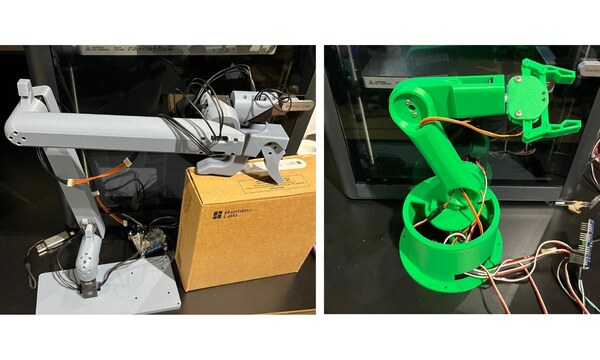
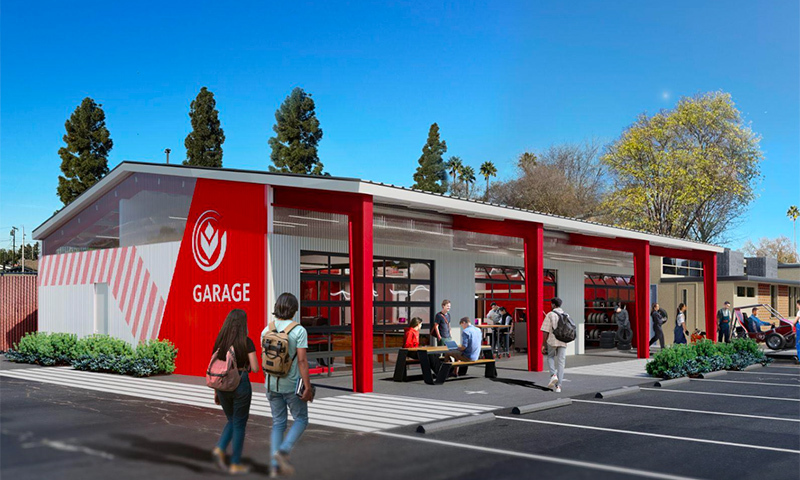
The most visible output of the gift is two new engineering garages covering more than 6,000 square feet. These are not classrooms. They are working spaces where students design, test, and build real systems: racing vehicles, robotic systems, aerial drones, and machine learning projects.
A drone hangar is part of the same build, giving students a dedicated space to develop and fly aerial systems that go beyond a campus lab. Construction was scheduled to begin in 2025.
The gift extends well beyond physical infrastructure. It funds student scholarships, endowed professorships, specialized summer internships in artificial intelligence, and research partnerships with industry and academic institutions. It supports the expansion of computer science and quantum computing programs at Biola.
What Biola's Leadership Says
Dr. Barry H. Corey, Biola's president, described the scope of the investment. "This landmark moment for Biola will have effects for decades. The gift enables forward-thinking programs equipping students in emerging technologies while preparing moral leaders."
Dr. Matthew Rouse, Dean of the School of Science, Technology and Health, was direct about the target. "This gift fuels our vision of being world-class Christ-centered STEM and health educators shaping technology for Christ."
It is students who can write code and understand its consequences. It is engineers who can build drones and ask what they should be used for. It is data scientists who can train models and think carefully about what those models do to the people who use them.
What a Bet This Size Signals
Gifts of $40 million from Silicon Valley do not go to institutions randomly. They go where a donor sees something that matches a conviction they hold deeply enough to act on.
That conviction is specific: the tech industry needs leaders who bring moral clarity alongside technical skill, and Christian higher education is one of the few places still building that combination deliberately.
For Biola students, the engineering garages are the physical output of that thesis. Starting from their first year, drone engineers, machine learning researchers, and robotics designers will work with real tools and real infrastructure, built for exactly the kind of formation this donor bet on.
Explore Partnerships | Support Biola.IO