Events
Our projects, people, and playgrounds for the curious and committed.
Where the work shows up in the real world
The organizations, communities, and institutions we build alongside




The Frontier Has Room
For Industry Partners
Biola connects industry partners with SSTH faculty and students for applied research, sponsored projects, and direct hiring. The students here work on real problems from day one and arrive as graduates who have already shipped things.
For Students
Biola puts students into real projects across robotics, life sciences, physics, and quantitative consulting. Your collaborators include faculty, industry partners, and ventures working on problems that haven't been solved yet.
For Donors
A Silicon Valley entrepreneur made the largest gift in Biola's history on a simple conviction: the world needs technologists who know what their work is for. Philanthropic support goes directly to research programs, facilities, and fellowships. Our aim isn't to chase the frontier. It's to define it.
Questions
Biola.io is the innovation platform for Biola University's School of Science, Technology and Health — a running record of the research, engineering, and partnerships underway in La Mirada, California, spanning computer science, engineering, biology, pre-med, nursing, and health science. Biola.edu remains the institutional site for admissions, program requirements, and degree information; biola.io covers the work itself: research collaborations, industry partnerships, and student projects that don't fit a course catalog.
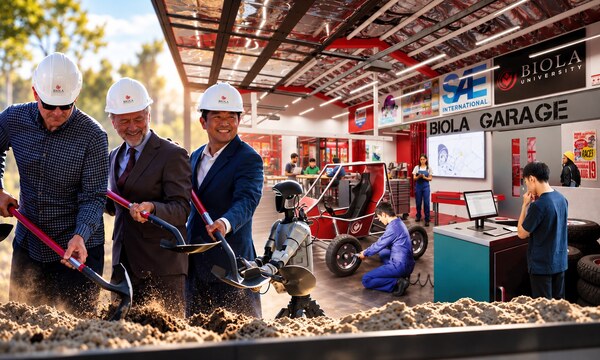
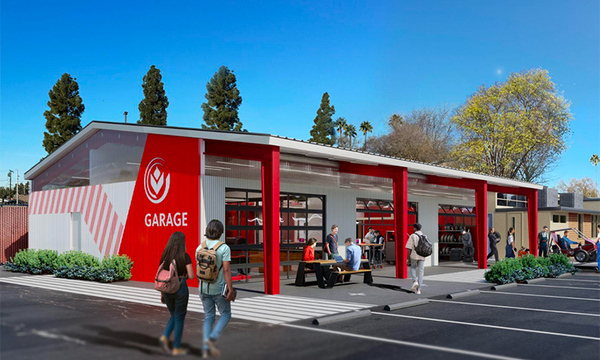
The Biola Engineering Garage is a 6,000+ square foot space on the La Mirada campus, 22 miles from downtown Los Angeles, where students build working prototypes — hands-on, iterative work that doesn't fit in a lecture hall. Phase 1 opened in 2025, funded by a $40 million gift from an anonymous Silicon Valley executive, the largest gift in Biola's history. The University dates to 1908, is accredited by WSCUC, and is a member of the Council for Christian Colleges & Universities.
The phrase describes Biola's operating premise: technical capability and ethical reasoning are trained together, not sequentially. Coursework and lab work require students to account for what a system is for and who it affects, not only whether it works. The expectation applies across the platform's disciplines — engineering, computer science, life sciences — as a standing requirement, not an elective.
Industry partnership takes several forms: research collaboration with faculty and student teams, sponsored projects, internship and hiring pipelines, and lab sponsorships. Philanthropic support goes directly to research programs, facilities, and fellowships. Most relationships begin with a conversation about a specific problem or need.
→ Become a Corporate Affiliate Partner
→ Support Biola.io